Enzymes- a fun introduction - YouTube:
'via Blog this'
Javier

Sunday, February 9, 2014

Monday, October 28, 2013
Success!!! 100% fertilization
Today at day 6 the embryos are 'candled'. We find 100% fertilization, all eggs are developing nicely.
We can see when the egg is placed near an overhead projector that light passes through the transparent egg shell but we see a dark shadow where the network of veins are developing and the even darker still outline of the duck embryo.
We can keep an eye on the development by using this method which is non invasive. The following link has a gallery of images to show duck development visible through candling. Click here.
We will be able to observe any eggs that die during development and remove these from the incubator if required.
Hatching success rates in incubating duck eggs is rarely 100%, this is often due to fluctuating humidity (water) levels, not turned frequently enough or the duck not breaking through the membrane/shell if the membrane dries out. We can predict perhaps 6-8 of the 12 eggs to complete development and pip successfully.
One of our developing ducks can be seen in this photo

We can see when the egg is placed near an overhead projector that light passes through the transparent egg shell but we see a dark shadow where the network of veins are developing and the even darker still outline of the duck embryo.
We can keep an eye on the development by using this method which is non invasive. The following link has a gallery of images to show duck development visible through candling. Click here.
We will be able to observe any eggs that die during development and remove these from the incubator if required.
Hatching success rates in incubating duck eggs is rarely 100%, this is often due to fluctuating humidity (water) levels, not turned frequently enough or the duck not breaking through the membrane/shell if the membrane dries out. We can predict perhaps 6-8 of the 12 eggs to complete development and pip successfully.
One of our developing ducks can be seen in this photo

Sunday, October 27, 2013
Spiky Tomato!
The weather is getting warmer and it's a good time to get out in the horticulture plot to plant some seedlings.
We have talked about heirloom plants in class, varieties of fruits and vegetables that were commonly grown but are now largely replaced with plants that have traits we consider to be more desirable.
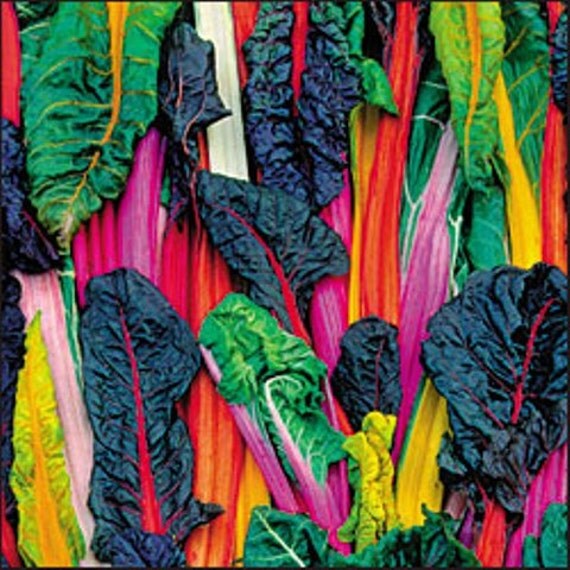
Once purple carrots.....now a vibrant orange. Red, yellow and orange silver beet stems more commonly seen as white.
I returned from the Hawkes bay farmers market with a few interesting seedlings. My favourite was the Litchi Berry Tomato. I can't wait to see how this plant grows and look forward to the challenge of harvesting. Reviews suggest a delicious berry tangy flavour!!
It's easy to see how these sharp looking thorns were undesirable by plant growers and our selectively bred tomato plants with redder, larger, juicier fruits with no thorns came about.
Find out more about the Litchi Berry tomato here. If you have ideas about heirloom vegetables you would like to try out in the plot let me know.


We have talked about heirloom plants in class, varieties of fruits and vegetables that were commonly grown but are now largely replaced with plants that have traits we consider to be more desirable.
Once purple carrots.....now a vibrant orange. Red, yellow and orange silver beet stems more commonly seen as white.
I returned from the Hawkes bay farmers market with a few interesting seedlings. My favourite was the Litchi Berry Tomato. I can't wait to see how this plant grows and look forward to the challenge of harvesting. Reviews suggest a delicious berry tangy flavour!!
It's easy to see how these sharp looking thorns were undesirable by plant growers and our selectively bred tomato plants with redder, larger, juicier fruits with no thorns came about.
Find out more about the Litchi Berry tomato here. If you have ideas about heirloom vegetables you would like to try out in the plot let me know.

Wednesday, October 23, 2013
Incubating Cayuga Duck eggs
Day one of incubation begins.
We place 12 duck eggs inside an incubator and set up a roster for turning the eggs 5 times a day (to stop embryo from sticking to the membrane on one side). We are responsible for keeping an eye on the temperature to check it stays stable at 37 degrees celcius and will when turning eggs will mist with spray of water to keep eggs moist and prevent egg drying out.
We will discuss embryo development and observe pictures of what stages our ducklings will be at during the 28 day cycle. We will compare and discuss similar stages of development in human embryos.
To find out more about incubating eggs you can click on this link.


We place 12 duck eggs inside an incubator and set up a roster for turning the eggs 5 times a day (to stop embryo from sticking to the membrane on one side). We are responsible for keeping an eye on the temperature to check it stays stable at 37 degrees celcius and will when turning eggs will mist with spray of water to keep eggs moist and prevent egg drying out.
We will discuss embryo development and observe pictures of what stages our ducklings will be at during the 28 day cycle. We will compare and discuss similar stages of development in human embryos.
To find out more about incubating eggs you can click on this link.


Thursday, September 5, 2013


Wednesday, April 3, 2013
Science (ICAS) 2013 Competition
ICAS in Science is a is a skills based Science Literacy assessment that is completed by over a million students from over 6,300 schools in Australia and New Zealand annually. Why should you enter?
Students sit the assessment on the 5th June, however if you want to enter you need to hand in permission slip with $8.50 to the resource centre by Friday 3rd May
Find out more here
- Fun and challenging competition
- Great for CV
- Gives you an indication of skill on a national level
- HVHS students have traditionally preformed very well.
- All students can participate - Y9 to Y13
Students sit the assessment on the 5th June, however if you want to enter you need to hand in permission slip with $8.50 to the resource centre by Friday 3rd May
Find out more here
Monday, March 25, 2013
Phenolphthalein indicator and dry ice bubbles
Click on this link to see what happens when you add the indicator Phenolphthalein to an acid or a base.
Watch cool bubble formed from Carbon Dioxide gas given off by dry ice.
(video not loading)
Watch cool bubble formed from Carbon Dioxide gas given off by dry ice.
(video not loading)
Dry ice bubbles and Universal Indicator with 10AE
As part of the pHizzing topic 10 AE and 10 SU explored the properties of dry ice. We looked at change of state and sublimation, density of carbon dioxide, and how carbon dioxide can be used to extinguish fires (in fire extinguishers).
(file not loading)
In this clip we see the colour change produced by the neutralisation of a known base (Ammonia diluted in water) as dry ice dissolves in water producing a weak acid (Carbonic acid). We also make 'dry ice bubbles'
(file not loading)
In this clip we see the colour change produced by the neutralisation of a known base (Ammonia diluted in water) as dry ice dissolves in water producing a weak acid (Carbonic acid). We also make 'dry ice bubbles'
Monday, November 26, 2012
Baking Powder and Baking Soda....what's the difference?

The general reaction
ACID + CARBONATE ----> METAL SALT + WATER + CARBON DIOXIDE.
It is the carbon dioxide gas that produces bubbles of air that makes the mixture rise. Click on this link to find out more.
Thursday, November 22, 2012
Parts of an eye
Click here to see an online dissection so that you are familiar with the parts and function of the eye
Wednesday, November 21, 2012
Y10 Revision Guide - Mr Waring's Model Answers
Click on the following link to access model answers provided my Mr Waring
Monday, November 19, 2012
What is fractional distillation?

Sunday, November 18, 2012
Y10 Revision class
Revision classes are running in B11 from 1530-1730 on the following dates
Monday (19th November) - Botanix and Forces
Tuesday: pHizzing and Hutt Rocks
Wednesday - Taha Tinana and Son et Lumiere
Friday - Science at Work and Current thinking
Come with questions and snacks.
Monday (19th November) - Botanix and Forces
Tuesday: pHizzing and Hutt Rocks
Wednesday - Taha Tinana and Son et Lumiere
Friday - Science at Work and Current thinking
Come with questions and snacks.
Forces Lab
Explore the following interactive forces lab. Remember forces are measured in Newtons (N) and forces act in pairs (Weight/gravity vs Support force and Thrust vs Friction). The net or resultant force is the amount and direction when one force is subtracted from its pair.
Why bother with Sex? (Sexual vs Asexual strategies)

Click here for video
The reproductive role of Flowers

Selective breeding in Cattle

Magnetism and mapping magnetic fields

Sunday, September 9, 2012
Chicks' genders revealed (sex linked traits)

Sorry Fran you are a male.....now called Frank
Inigo..........luckily we gave you such a manly name!
Benedict and Pingu our two cute soon to be hens!!
Find out more about how sex can be determined in young chicks using secondary sex characteristics in sex linked traits
http://www.ehow.com/how_6101169_tell-barred-rock-baby-chicks.html
Wednesday, September 5, 2012
The 'cute chicks' in B11


Inigo and Benedict (youngest and
oldest) snuggle up.
Subscribe to:
Posts (Atom)